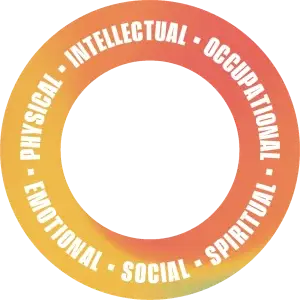
Our sports-specific wellness wheel covers 6 areas:
Intellectual wellness
The creative and stimulating activities that lead to learning. In sport, this can involve engaging in new types of training and competition preparation, such as reviewing sport and game strategy, learning about wellness and body awareness, or learning a skill unrelated to sport. This can also include sharing athletic gifts, talents, and insights with others.
Occupational wellness
Personal satisfaction and enrichment from one’s professional life and work. In sport, this can lead to sports-specific careers in coaching, facilities management, refereeing, or other fan- or sport-specific work. It can also be a healthy distinction and boundary to avoid working in the sports world and maintaining a separate professional life.
Spiritual wellness
Appreciation for life and the natural forces of the universe. In sport, this can relate to promoting the values of sport and healthy lifestyles, as well as fostering a connection to the natural world. For instance, if you engage in an outdoor sport, this connection might come through observing nature before, during, or after competition. It can also take the form of a separate spiritual practice, such as mindfulness, meditation, or prayer.
Social wellness
Contributions to the community and the environment with a focus on the interdependence of others and nature. In sport, this can look like connections to teammates or club members, coaches, and other supportive people within sport. It is important to center healthy relationships within sport, such as connecting with people in sport who are supportive and compassionate.
Emotional wellness
Acceptance and awareness of one’s feelings and capacity to manage behaviors and reactions. In sport, this can look like maintaining healthy emotional boundaries, practicing supportive downtime, and engaging in activities both in and outside of sport that support emotional wellness, reduce stress, and bring joy. Emotional wellness includes practicing mentally strengthening practices in and outside of sport, including self-talk awareness, motivational practices, and strengthening resiliency practices.
Physical wellness
Consistent prioritization of personal health and physical self-care. In sport, this can mean listening to your body’s response to training and physical activity. Finding balance in both training and increasing physicality, as well as rest and recovery. This can also involve bringing in new training and extending it to other parts of the body. It means prioritizing healthy eating habits and healthy physical activity, relying on knowing the body’s limits, wellness, and with an awareness of healthy intrinsic motivations, not making decisions exclusively on extrinsic motivators. Not too much or too little.
Adapted from Dr. Bill Hetter, Six Dimensions of Wellness, https://www.wellnessalliance.org/resources-and-tools/nwis-six-dimensions-of-wellness